There was a time when gambling required an actual trip to a casino, a racetrack, or a smoky corner bar where somebody knew somebody who could take your action. Today, the casino is in your pocket. It vibrates, sends notifications, offers “boosted odds,” and knows exactly when you are most likely to place another bet.
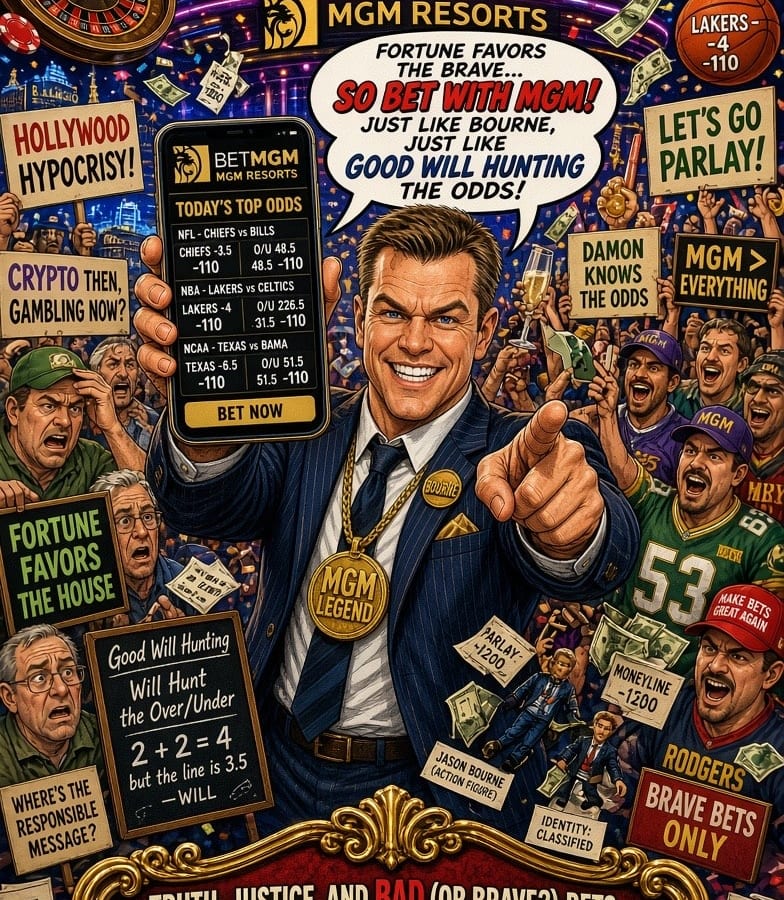
The online betting industry doesn’t merely sell gambling. It sells the illusion that gambling is entertainment, sophistication, and even a little bit of patriotism. And standing in front of that sales pitch, smiling into the camera, are celebrities.
Athletes. Actors. Musicians. Former champions. People whose fame and credibility were built on discipline, talent and achievement are now being paid to tell millions of people that wagering on the next play is harmless fun.
“Bet the house.”
That’s the joke the industry hopes nobody notices.
Because for some people, the house isn’t just where they live. It’s what they eventually lose.
The Casino That Follows You Home
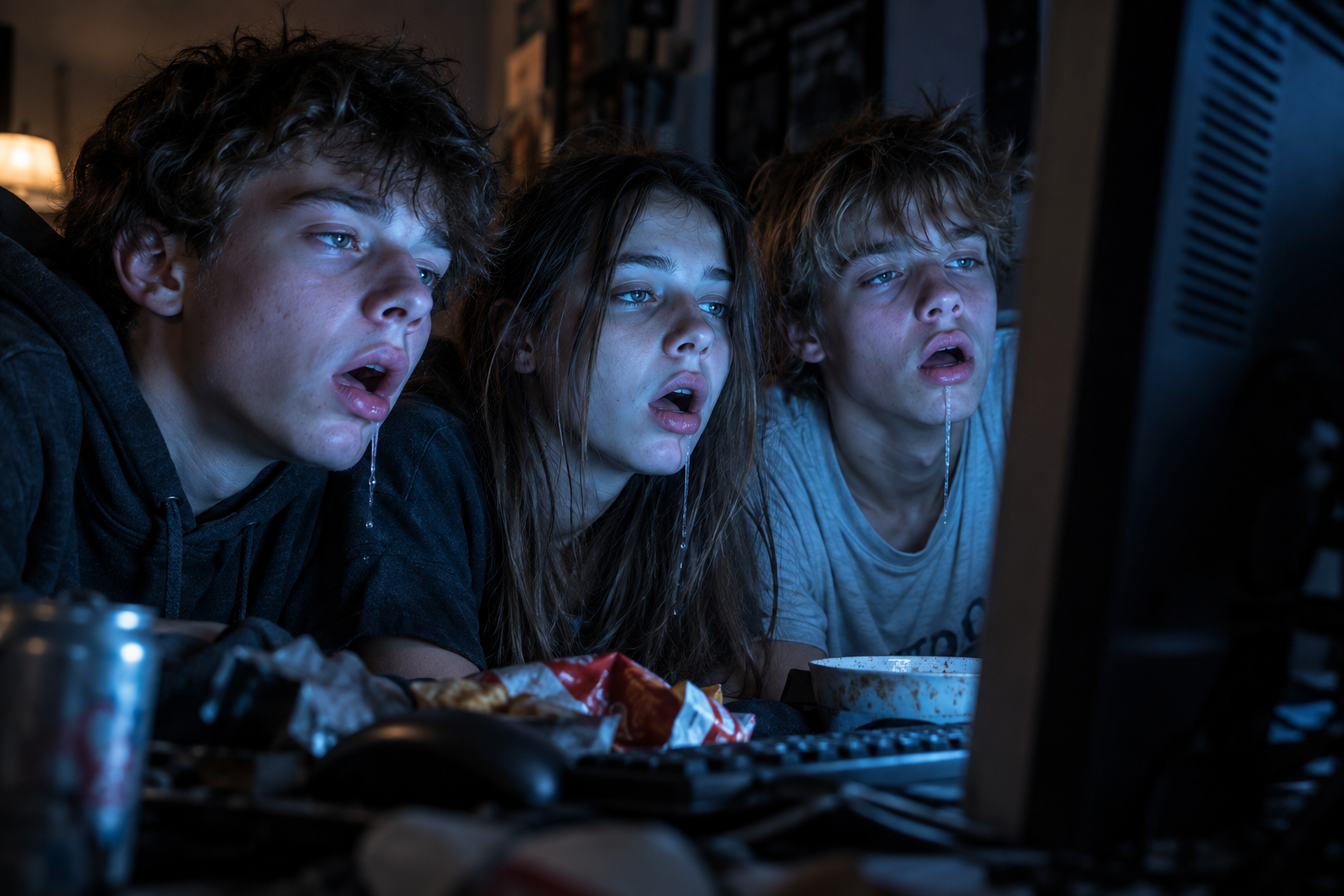
The genius of online gambling isn’t that it made betting easier. It’s that it made betting constant.
You don’t have to drive anywhere. You don’t have to plan an evening around gambling. You don’t even have to get off the couch.
You can bet while watching television. You can bet while sitting at a bar. You can bet during a commercial break. You can bet on the opening kickoff, the next touchdown, the next pitch, the next three-pointer, and increasingly obscure events that most people wouldn’t have considered gambling on five years ago.
And when the game ends?
There’s another game.
The industry has transformed gambling from an occasional activity into an always-available digital product.
The phone has become the slot machine.
And unlike the old slot machine, it can follow you into bed.
The Celebrity Salesmen
Then come the celebrities.
The pitch is rarely, “You could develop a gambling problem.”
Instead, it’s jokes. Swagger. Celebrity cameos. Free bets. Promotional credits. “Bet responsibly” disclaimers delivered at lightning speed while the rest of the commercial spends thirty seconds making gambling look thrilling.
The contradiction is staggering.
Imagine an industry selling cigarettes with a famous athlete explaining how refreshing smoking is before quietly flashing a warning about lung cancer in microscopic print.
Gambling doesn’t carry the same physical health consequences as tobacco, of course. But the psychological and financial consequences of compulsive gambling can be devastating — and the industry’s marketing machine knows that the most effective way to normalize gambling is to make it part of the culture.
Celebrity endorsements help accomplish exactly that.
The celebrity doesn’t look desperate.
The celebrity looks successful.
The message, intentional or not, becomes: People like me do this. Successful people do this. It’s normal.
And that’s precisely what makes the endorsements so troubling.
The Cross-Addiction Nobody Wants to Talk About
There’s another uncomfortable subject that deserves far more attention: the relationship between gambling problems and substance-use problems.
Addiction doesn’t always respect categories.
A person struggling with one addictive behavior can be vulnerable to another, particularly when the underlying drivers include impulsivity, sensation-seeking, emotional distress, or the desire to escape uncomfortable feelings.
Research has documented substantial overlap between gambling disorder and substance-use disorders. People dealing with problematic gambling may also experience problems involving alcohol or drugs, and vice versa.
That doesn’t mean everyone who gambles will use drugs, or that everyone who uses drugs will gamble.
It means the simplistic idea that these are completely separate worlds is dangerously inadequate.
For somebody already vulnerable to addiction, putting a casino in their pocket and surrounding it with celebrity endorsements isn’t necessarily harmless entertainment.
It can be another avenue for the same destructive cycle:
anticipation → risk → reward → loss → chasing → desperation → another bet.
And when the emotional crash arrives, another addictive behavior may become an escape.
That’s the cross-addiction conversation the glossy advertisements don’t have.
“Responsible Gambling” Is Not a Magic Spell
The industry loves two words:
Bet responsibly.
Fair enough.
But “responsibly” is doing an enormous amount of work.
The phrase can make a profoundly complicated problem sound like a matter of personal discipline. Just know your limit. Set a budget. Walk away.
But addiction is, by definition, not simply a failure to understand limits.
A person in the grip of compulsive gambling may understand perfectly well that they should stop — and still be unable to stop.
That’s the uncomfortable distinction between recreational gambling and gambling disorder.
And it’s why putting a disclaimer at the bottom of a commercial doesn’t magically neutralize an advertising campaign designed to make betting feel omnipresent.
The Business Model Loves the Chaser
The most disturbing feature of gambling isn’t that people lose.
It’s that losing can create another opportunity for the industry.
A casual gambler loses twenty dollars and goes home.
A compulsive gambler loses twenty dollars and thinks:
I can win it back.
Then fifty.
Then one hundred.
Then five hundred.
The loss isn’t necessarily the end of the transaction.
It can become the reason for the next transaction.
That is the psychological trap known as chasing losses.
And somewhere behind the colorful graphics, promotional offers and celebrity commercials sits a business whose financial incentive is fundamentally different from the gambler’s.
The gambler wants to leave with more money.
The house wants the gambler to keep playing.
Those objectives are not exactly aligned.
When Entertainment Becomes Infrastructure
The betting industry has succeeded because it stopped looking like gambling.
It looks like sports.
It looks like entertainment.
It looks like statistics.
It looks like fantasy.
It looks like a celebrity having fun.
It looks like a harmless little wager between friends.
But underneath all of that is the same ancient proposition:
Put your money down and hope you’re right.
Technology simply made the proposition faster, easier and more addictive.
And celebrity culture helped make it respectable.
That’s where the public conversation needs to become much more honest.
This isn’t an argument that every sports bettor is an addict.
It isn’t an argument for banning every wager.
It isn’t even an argument that celebrities who endorse betting are personally responsible for every person’s gambling losses.
It is an argument against pretending there is no contradiction between selling gambling as casual entertainment and acknowledging that addiction can destroy lives.
The Question Celebrities Should Be Asked
The next time a celebrity appears in a betting commercial, perhaps the question shouldn’t be:
“What’s your favorite team?”
Perhaps it should be:
“How much money does your endorsement make from an industry whose most vulnerable customers can lose control?”
And then:
“What are you doing to ensure your promotion doesn’t reach people already struggling with addiction?”
Those are much less entertaining questions.
Which may be exactly why they need to be asked.
Because the online betting industry has built something remarkably efficient: a casino that never closes, never leaves your side and can turn virtually any sporting event into another opportunity to wager.
And it has surrounded that casino with some of the most recognizable people in America.
The industry calls it entertainment.
The celebrities call it a partnership.
The advertisements call it fun.
But for the person who can’t stop, it may look very different.
It may look like a paycheck disappearing.
A relationship collapsing.
A debt becoming another debt.
A drug becoming another escape.
And eventually, the realization that the biggest bet wasn’t placed on a game at all.
It was placed on the belief that you could always stop tomorrow.
Bet the house.
Just don’t pretend nobody warned you what happens when the house wins.