Anybody else remember when Michael Stipe professed irony to be the shackles of youth?
Goddamn, I miss irony.
I miss when being young came with a healthy amount of confusion, no internet, bad decisions, loud guitars, and an irrational hatred of whatever your parents happened to enjoy (shout out to MamaDukes for always supporting). Teen angst used to be practically a renewable energy source. You could power an entire suburban neighborhood off one pissed-off 16-year-old with a Discman, a bedroom door, and absolutely no intention of explaining what was wrong.
Now?
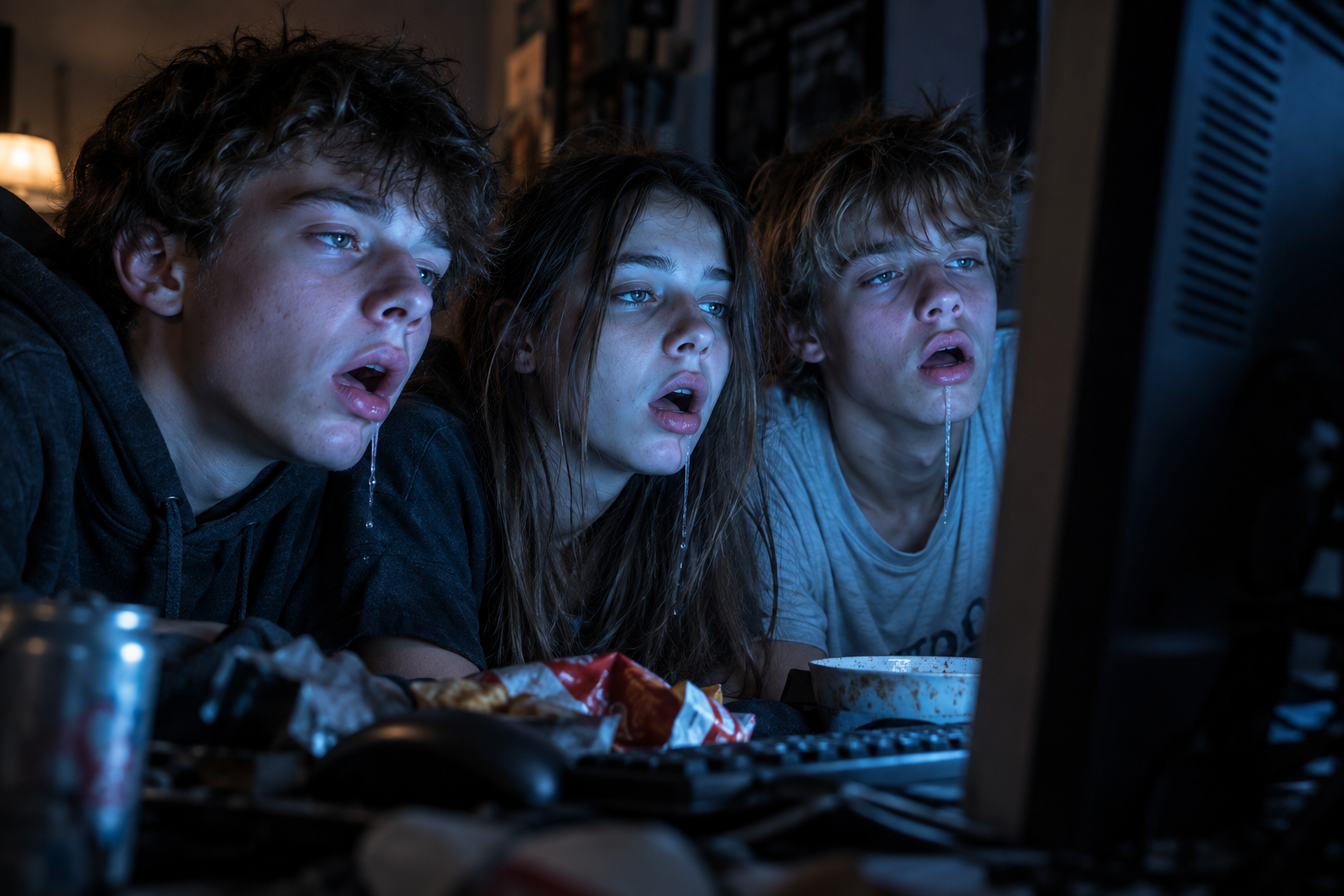
Whatever this generation refers to itself as, their shackles aren't irony. They're PlayStation controllers, algorithms, YouTube influencers, TikTok trends, and the crushing psychological responsibility of making sure complete strangers know what they ate for lunch.
Maybe my age is showing. Fine. Let it show.
I'll forever be grateful that I came from a generation where Chris Cornell and Billy Corgan were our "influencers." Kurt Cobain didn't need to remind us to smash the like button. Trent Reznor wasn't selling us a promo code for protein powder halfway through The Downward Spiral. Marilyn Manson wasn't asking us to subscribe to his Patreon before terrifying everyone's parents.
They influenced us by making something.
That's the difference.
When we wanted to rebel, we threw on a Marilyn Manson T-shirt, pissed off our parents, bought a guitar we couldn't play, cranked an amp we couldn't afford, and tortured the neighborhood with three chords until somebody called the cops.
We weren't necessarily accomplishing anything.
But at least we were making noise.
Our heroes made us want to participate. Pick up a guitar. Start a band. Draw something offensive (Vaughn Bode I'm forever in your debt). Write something stupid. Skate somewhere you weren't supposed to. Make a Xeroxed zine nobody would read (cough tragedyUSA). Sneak into a show. Dye your hair some ridiculous color and spend the next three weeks pretending it didn't look terrible.
The point wasn't that any of it was particularly good.
The point was that you did it yourself.
That was the beauty of teenage rebellion: failure was practically mandatory.
Your first band sucked.
Your poetry was embarrassing.
Your artwork looked like something scratched into the wall of a gas-station bathroom.
Nobody cared.
You weren't building a brand.
You weren't creating "content."
You weren't worried about engagement.
You were trying to figure out who the hell you were.
Somewhere along the way, youth culture seems to have traded participation for spectatorship.
Why learn guitar when you can watch somebody else play one?
Why go skateboarding when you can watch thirty-second clips of somebody doing tricks you'll never attempt?
Why start a terrible garage band when you can spend six hours watching somebody else play a video game?
Seriously, fuck you, PewDiePie.
I'm sure he's delightful.
But the idea still blows my mind.
We spent decades improving video games until they became enormous interactive worlds where you could essentially do anything — and somehow the final evolution was sitting on the couch watching another person play them.
Imagine explaining that to a kid in 1994.
"So in the future, video games will look almost real."
"Awesome."
"And millions of people will watch other people play them."
"…Why?"
Nobody knows, kid.
Go put Dookie back in the CD player.
And yes, every generation thinks the next one is screwed.
Our parents thought MTV was destroying civilization. Their parents thought rock 'n' roll was turning teenagers into sex-crazed communists. Before that, somebody was probably furious because young people were spending too much time reading novels instead of churning butter.
So maybe I'm just another aging asshole yelling at a cloud — except the cloud now stores everybody's personal information.
But something really does feel different.
Teen rebellion used to mean escaping the adult world.
Now the adult world follows kids everywhere.
It's in their bedrooms. It's in their pockets. It's on their phones at three in the morning, measuring their popularity in followers, views, comments, likes, shares, and whatever other digital scoreboard we've invented to make adolescence even more psychologically horrifying than it already was.
We had mirrors.
They have analytics.
And maybe that's where the angst went.
It didn't disappear.
It got monetized.
Every insecurity became an audience.
Every hobby became content.
Every personality became a potential brand.
Every embarrassing teenage phase — the stuff the rest of us were lucky enough to leave buried in a shoebox somewhere (I still own a few Sid & Nancy shirts) — is now photographed, uploaded, archived, analyzed, commented on, and potentially preserved forever.
That's a hell of a way to grow up.
So maybe kids today aren't less rebellious.
Maybe rebellion itself has been domesticated.
The machine got smarter.
It figured out that instead of fighting teenage angst, you could sell it something.
Sell it clothes.
Sell it followers.
Sell it gaming skins.
Sell it subscriptions.
Sell it an identity.
Then sell it another identity six months later.
Punk eventually became a shirt at the mall. Grunge became a fashion aesthetic. Alternative became a radio format. Rebellion has always eventually found somebody willing to slap a barcode on it.
But there was still something beautifully inefficient about our version.
Four kids in a garage weren't scalable.
A photocopied punk zine didn't have analytics.
A shitty local band couldn't be optimized by an algorithm.
You just made something because something inside you demanded to get out.
That's the part I miss.
Not because the '90s were some magical cultural paradise. They weren't. We had plenty of garbage too. We just had different garbage.
I don't need teenagers today to listen to Soundgarden (thankfully my son does).
I don't need them wearing Smashing Pumpkins shirts.
Actually, judging by the number of teenagers wearing Nirvana shirts, apparently that part worked out fine.
I just want them to get pissed off enough to make something.
Turn off the influencer.
Put down the controller occasionally.
Grab a guitar.
Grab a camera.
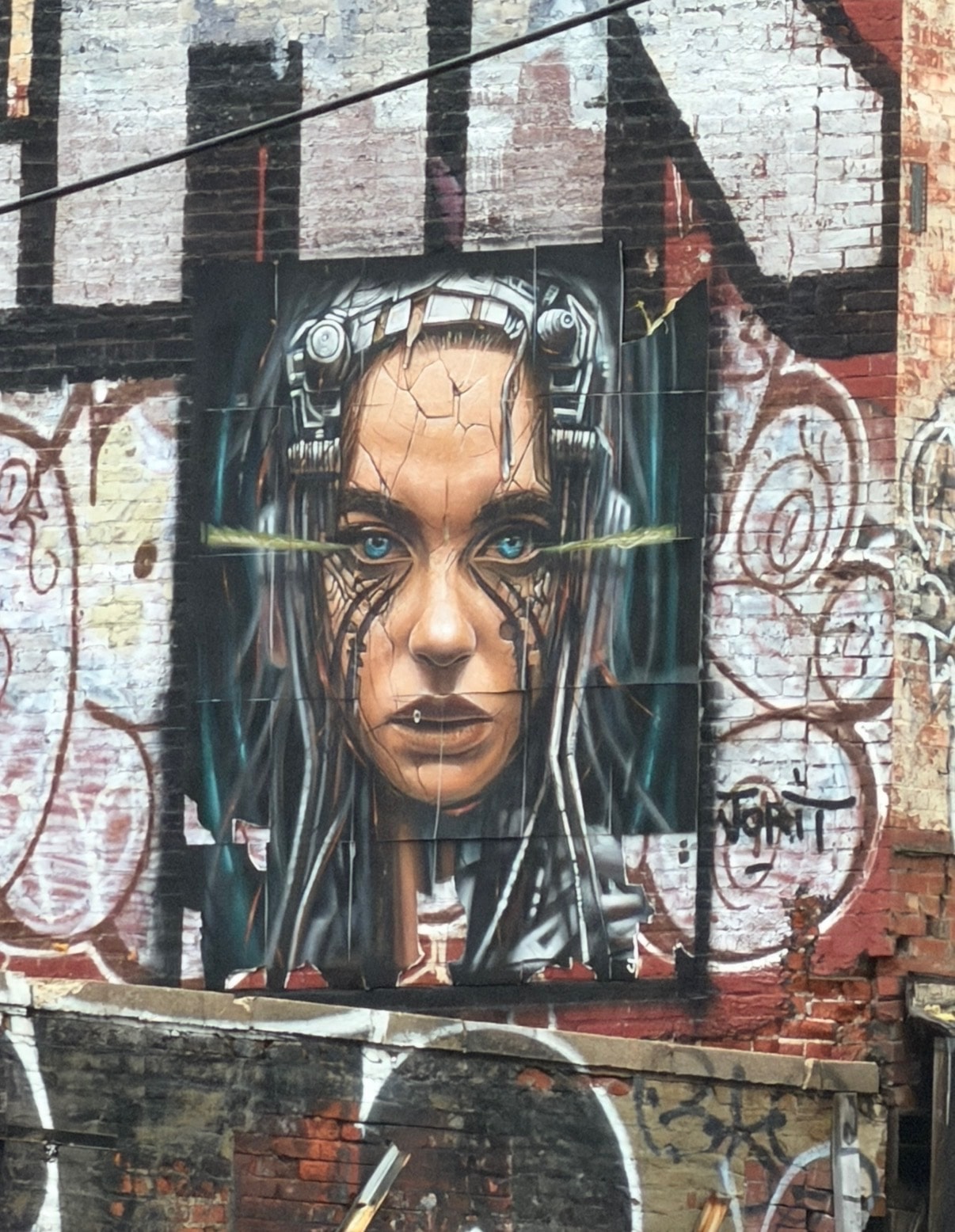
Grab a spray can (even at my undisclosed age I still tag, though now with designer spray cans).
Grab a notebook.
Start a band nobody asked for.
Make a movie nobody understands (where are my John Waters fans at).
Write a manifesto you'll be embarrassed by when you're 30.
Create something ugly… (JNCO jeans)
Create something loud… (Limp Bizkit)
Create something completely fucking pointless… (everything after 2002)
Just create something that's yours.
Because teenage angst was never supposed to be productive.
It wasn't supposed to be marketable.
It wasn't supposed to have sponsors.
It was supposed to annoy your parents, confuse your teachers, scare your neighbors, and eventually give you a collection of photographs that make you wonder what the hell you were thinking.
Maybe Michael Stipe was right about irony being the shackles of youth.
But I'll take those shackles over an algorithm any day.
At least irony came with guitars.