If you're old enough—like myself—to remember Parental Advisory stickers slapped across your favorite albums, congratulations: your knees probably hurt for no apparent reason and you remember when music required talent.
Albums, for you fetuses, were these physical objects containing music that we actually paid money for. Think Spotify, except it worked without Wi-Fi, nobody interrupted your favorite song to sell you erectile dysfunction products (Generation Alpha my ass), and the artist occasionally made enough money to pay his future ex wife.
Back in those days, America was introduced to Tipper Gore and the PMRC—the Parents Music Resource Center—a collection of politically connected bored wives who looked at rock music, heavy metal and pop culture and apparently decided this was the hill civilization was going to die on.
The PMRC famously produced the "Filthy Fifteen," a list of songs they considered objectionable because of sex, violence, drugs, occult themes or whatever else was capable of causing suburban parents to clutch their pearls hard enough to produce diamonds.
Prince made the list. So did Madonna. Judas Priest. Mötley Crüe. Twisted Sister. Cyndi Lauper.
Basically, if you were making music worth listening to in the mid-'80s, there was a decent chance somebody's mom wanted a warning sticker on it.
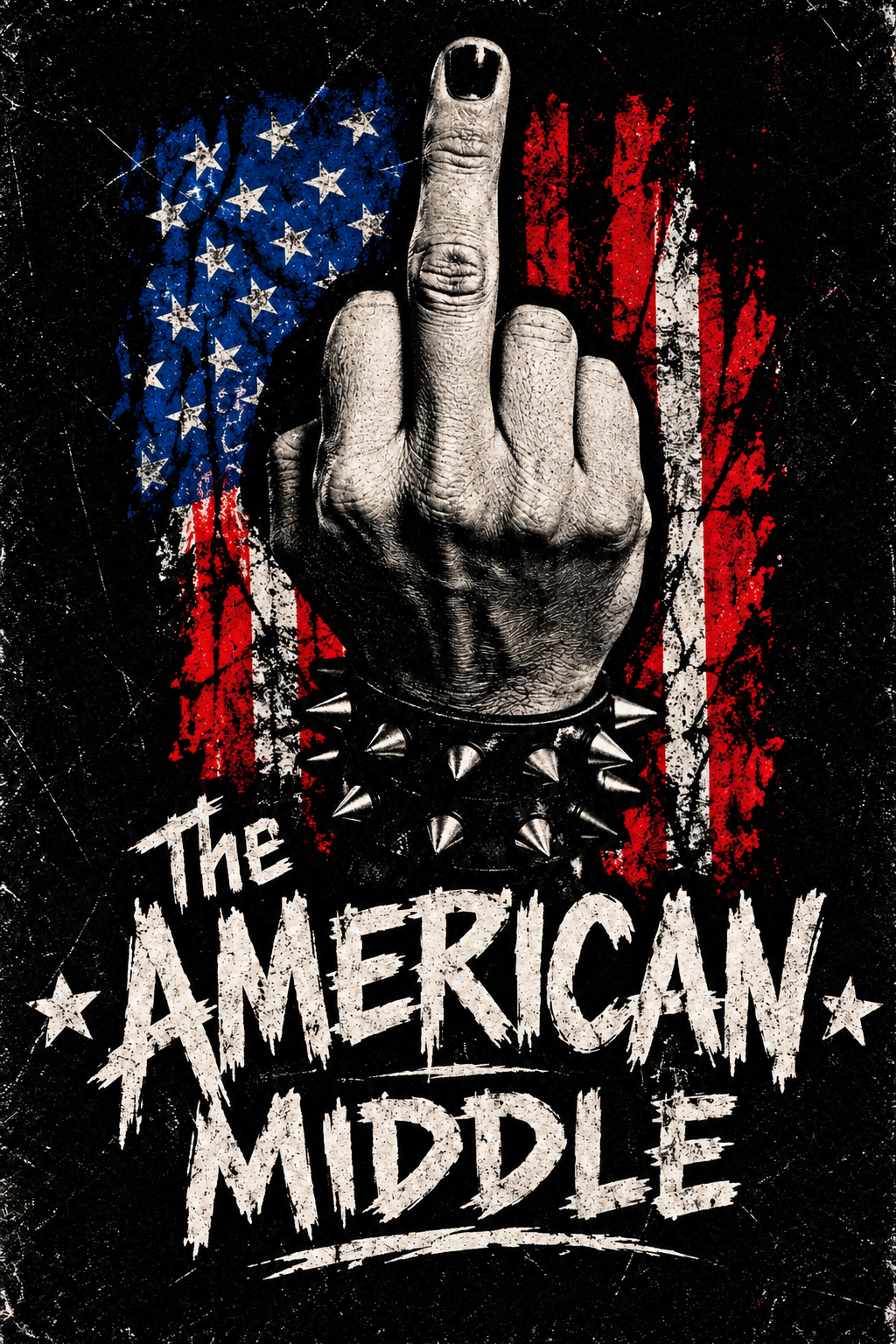
The controversy eventually helped bring us the famous Parental Advisory label—the little black-and-white rectangle that was supposedly going to protect America's children but instead became one of the greatest accidental marketing campaigns in music history.
Nothing makes a teenager want an album more than parents suggesting they shouldn't have it.
Put a sticker reading PARENTAL ADVISORY: EXPLICIT CONTENT on an album and you might as well have written: THIS ONE'S AWESOME.
But underneath all the congressional hearings, moral panic and spectacular Dee Snider (we all owe Dee thanks) hair was an actual argument: Who is influencing the kids?
Parents were terrified that musicians had too much power over young people. Ozzy Osbourne was accused of influencing suicide. Judas Priest was dragged into court over allegations of hidden subliminal messages. Heavy metal records were played backward by terrified adults searching for satanic instructions, apparently unaware that most teenagers had enough difficulty understanding the lyrics when the records were played forward.
Music was dangerous. MTV was dangerous. Prince was dangerous. Madonna was dangerous. And Cyndi Lauper's "She Bop" apparently represented such an immediate threat to Western civilization that somebody felt compelled to alert Congress (if you're unfamiliar with this gem, think WAP 40 years ahead of its time).
Which brings us to 2026.
And I cannot believe I'm about to type these words: Where the hell is Tipper Gore when we need her?
Because we've entered the age of the influencer.
Even typing that word makes me want to punch some innocent drywall.
Influencer. Not musician. Not filmmaker. Not comedian. Not writer. Not painter. Not photographer. Not even professional asshole (we need you Dennis Leary). Just… Influencer.
It's a career description that sounds like something invented during a marketing meeting between Satan and Bang energy drink company.
The PMRC was worried about Prince corrupting the youth. Today kids can open their phones and watch some jackass pull a fire alarm, harass minimum-wage employees, wreck somebody's property, terrorize strangers and then sprint toward a luxury car while somebody films it vertically. And somewhere beneath the video: DON'T FORGET TO LIKE AND SUBSCRIBE!!!
Progress.
Take YouTuber Krishna Sahay (oh if I ever catch you in public) whose stunt-based content has included pulling fire alarms in stores and fleeing in an exotic car.
The PMRC thought "She Bop" was dangerous? I'd genuinely love to put surviving members of that committee in front of modern social media for twenty minutes. No preparation. Just hand them an iPad. TikTok. YouTube. Instagram. Twenty minutes later they'd be outside demanding we put warning labels on the entire internet and fucking tide pods.
And here's the part where I reluctantly give the old moral-panic crowd a sliver of credit. They weren't completely wrong about influence. They were wrong about what to do about it.
Looking back at the Filthy Fifteen, many of those musicians really were enormously influential. Prince didn't just sell records. He influenced musicianship, fashion, sexuality and what people thought a pop star could be. Young people, if you want the true definition of what being a G.O.A.T. entails, look up Prince.
Madonna influenced an entire generation of performers. Heavy metal created communities of kids who discovered that there were millions of other weird bastards out there who felt exactly as alienated as they did. Punk did the same thing. Hip-hop did the same thing.
Music gave kids identities. Sometimes stupid identities (looking at you Flav). Sometimes obnoxious identities. But identities nonetheless. And MTV poured gasoline on the whole thing. Suddenly the music had a face. A wardrobe. An attitude. A haircut your mother absolutely fucking hated.
But there was one important difference between yesterday's influencers and today's crop: They actually had to make something.
That's the part that gets lost. Prince could play practically anything you put in front of him and steal your girlfriend and her fishnets. Eddie Van Halen reinvented what millions of kids thought a guitar could sound like. Madonna understood performance and image better than entire marketing departments. Public Enemy made records that sent teenagers running toward history books (Chuck, you're still in my top 10). Kurt Cobain made miserable kids in suburban bedrooms realize somebody else was miserable too.
These people influenced culture because they created culture.
Today you can become famous because you screamed at a Costco employee while your friend filmed it. We've somehow separated influence from accomplishment.
That's the weird part. Fame used to be the byproduct. You wrote the song. You made the movie. You painted the picture. You told the joke. You wrote the book. You did something, and sometimes fame followed. Now fame itself is the product. The goal isn't necessarily to create something worth remembering. The goal is engagement. Clicks. Views. Subscribers. Comments. Get people angry. Get people horny (or apparently stay hard). Get people arguing. Get people hate-watching. It doesn't matter why they're looking. Just keep them looking.
Which is probably why I recently found myself standing at a gas station having an existential crisis over a T-shirt. A teenager looked at my shirt and asked: "Who's that?"
It was Prince.
I looked down at the shirt. Then at him. Then back at Prince. For several seconds I experienced what I can only describe as an out-of-body experience. Finally I said: "You haven't heard of Prince? Purple Rain?"
This was the mature response. The response occurring inside my head was: ARE YOU FUCKING KIDDING ME?
And look, I don't expect every sixteen-year-old to know every cultural figure from forty years ago. That's how generations work. We inherit some things. We forget others (hopefully Dub Step). And eventually all of us become the asshole saying music was better when we were young.
But it did make me wonder what today's cultural inheritance is going to look like. Because there's a difference between a generation discovering its own music and a generation being fed an endless conveyor belt of personalities whose primary talent is maintaining your attention for another twelve seconds.
Maybe that's the real danger. Not that influencers are corrupting America's youth. America's youth has always been corruptible. That's practically their job. The danger is that we've built an economy where attention itself is currency, and the easiest way to get rich is often to become louder, dumber, crueler or more outrageous than the person who posted thirty seconds before you.
And the algorithm doesn't care whether you're Prince or some guy on a plane wearing a Burger King Crown. It just knows somebody watched.
That's the part Tipper Gore never understood. The problem was never that one song could corrupt an entire generation. The problem is that somebody eventually figured out how to turn every fear, desire and impulse into a business model.
The PMRC wanted to put a warning label on the record. The algorithm doesn't need a warning label. It studies the warning, measures the outrage, and recommends twelve more.
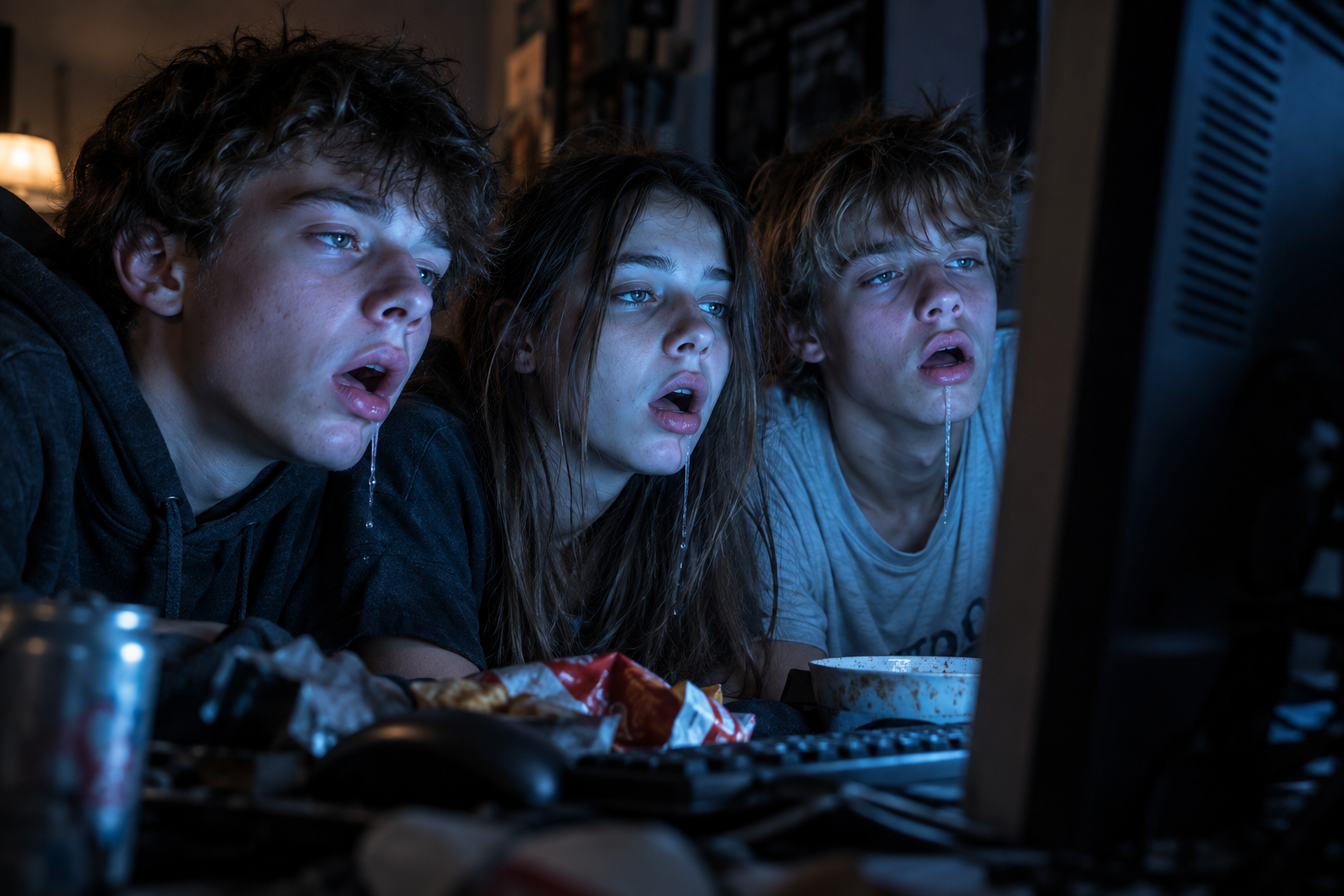
So here we are. Forty years after parents marched into Washington terrified that musicians were influencing their children, we've handed every kid in America a glowing rectangle containing millions of people professionally competing for their attention. No sticker. No record store clerk smelling like weed. No badass album cover. No Tipper Gore. Just an algorithm whispering: "You watched one idiot. Would you like to see seventeen thousand more?"
And somehow the generation that survived Ozzy Osbourne, N.W.A., 2 Live Crew, Madonna, Marilyn Manson and gangsta rap now finds itself staring helplessly at a teenager watching another teenager watch somebody else play a video game.
Maybe this is karma. Maybe every generation eventually gets the cultural apocalypse it deserves.
Still, I hold out hope. Somewhere, right now, there's probably a kid ignoring TikTok and learning three chords on a shitty guitar (your time scootch). Another kid is writing something that'll piss everybody off. Some girl is making art her parents absolutely hate.
Good. That's where culture comes from. Not algorithms. Not engagement strategies. Not brand partnerships. People making shit because they have something to say.
Because the algorithm can make you visible, but it can't make you matter. It can turn a prank into a career, outrage into a paycheck and a human being into a thumbnail with a pulse. But it can't give you a song that follows somebody home. It can't give a lonely kid a reason to pick up a guitar. It can't make a stranger feel less alone in the dark.
That still requires somebody to create something real.
And somewhere, I hope Mark Knopfler is sitting at a desk with a pen in his hand, staring at the modern influencer economy and realizing the sequel practically writes itself.
Money for nothing.
Except now the money isn't for nothing. It's for your attention. Your data. Your outrage. Your twelve seconds.
And if you're not careful, they'll take those twelve seconds, stack them end to end and sell you back your entire fucking life.
Turns out we hadn't seen anything yet.