"Two weeks to flatten the curve" sounded like a sacrifice people could manage. Close the shop, cancel the gig, stay home, help keep hospitals from collapsing. Nobody liked it, but a short emergency pause seemed survivable.
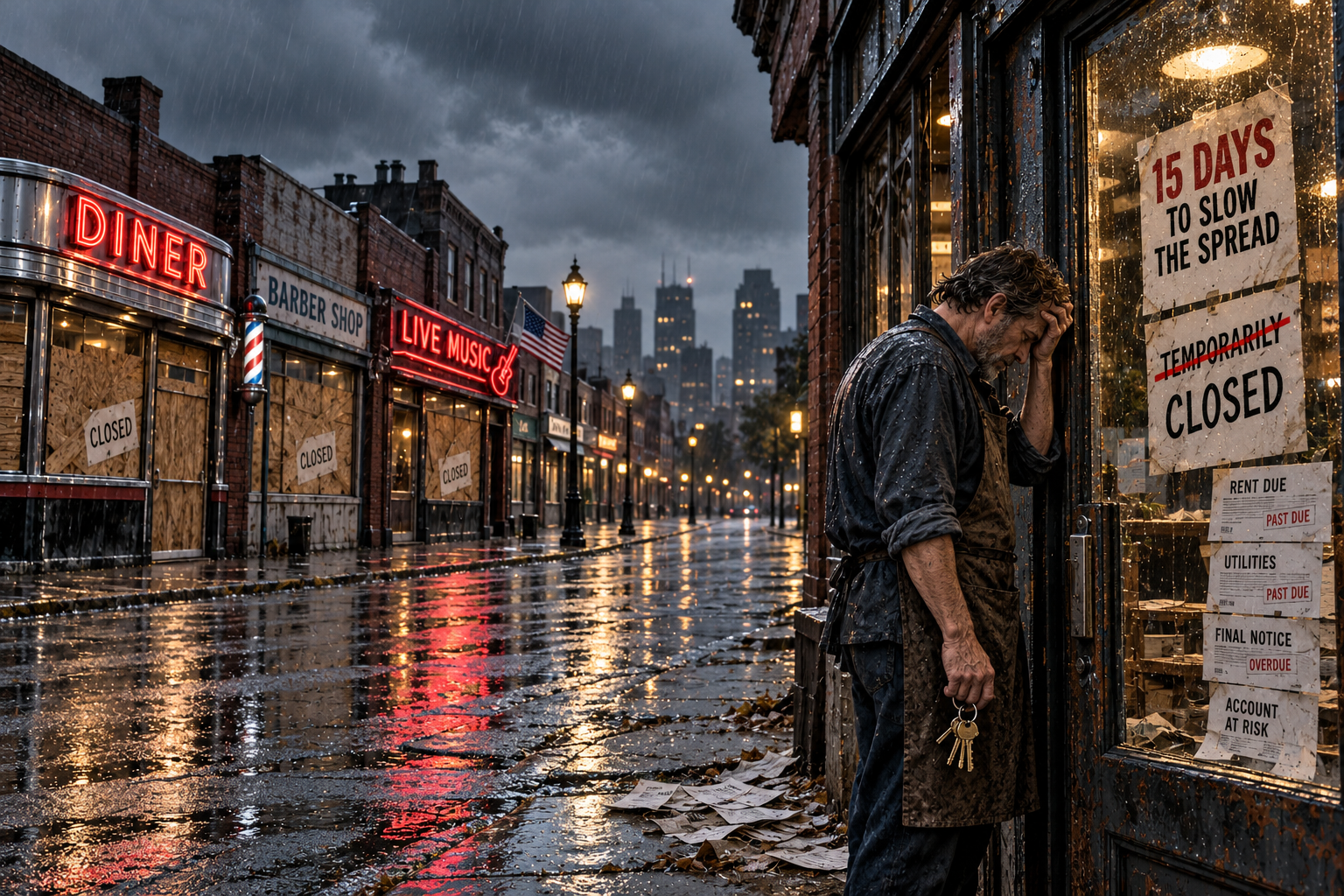
The official federal campaign, launched March 16, 2020, was actually called "15 Days to Slow the Spread." By late March, President Trump extended the guidelines through April 30. The calendar changed. The bills kept their original deadlines.
That became the nightmare for small businesses. Restaurants, bars, salons and music venues faced restrictions imposed through a patchwork of state and local decisions. A business built around customers walking through the door suddenly had to survive without them.
Try explaining "flattening the curve" to a landlord expecting a check.
The economic wreckage was real. Federal Reserve researchers later reported roughly 200,000 more business establishments permanently closed than historical patterns would have predicted during the pandemic's first year. Those were workplaces, neighborhood institutions and years of somebody's life — not just unfortunate numbers on a recovery chart.
But an honest indictment needs honest evidence. Shutdown orders did not cause every closure. Fear of infection also emptied businesses. A study tracking visits to more than 2.25 million businesses estimated that legal restrictions explained about seven percentage points of a 60-percentage-point collapse in customer traffic. Removing an order could not magically make customers feel safe.
Nor does the pandemic's continuation prove distancing accomplished nothing. Research found that stay-at-home orders were associated with reductions in cases and deaths. Flattening the curve meant slowing transmission and reducing pressure on hospitals; it never meant the virus would disappear on day sixteen.
The strongest criticism is the gap between a tidy slogan and an emergency with no tidy ending. A two-week campaign could not provide the certainty businesses needed about reopening, revenue or survival. Public cooperation was easier to request than financial endurance.
For an owner who lost a diner, a barbershop or a basement venue, "the economy recovered" offers little comfort. National recovery does not hand back the keys.
The lesson should be blunt: when government asks people to suspend their livelihoods for public protection, keeping those people afloat must be part of the plan.
You cannot pay rent with a public-service announcement.