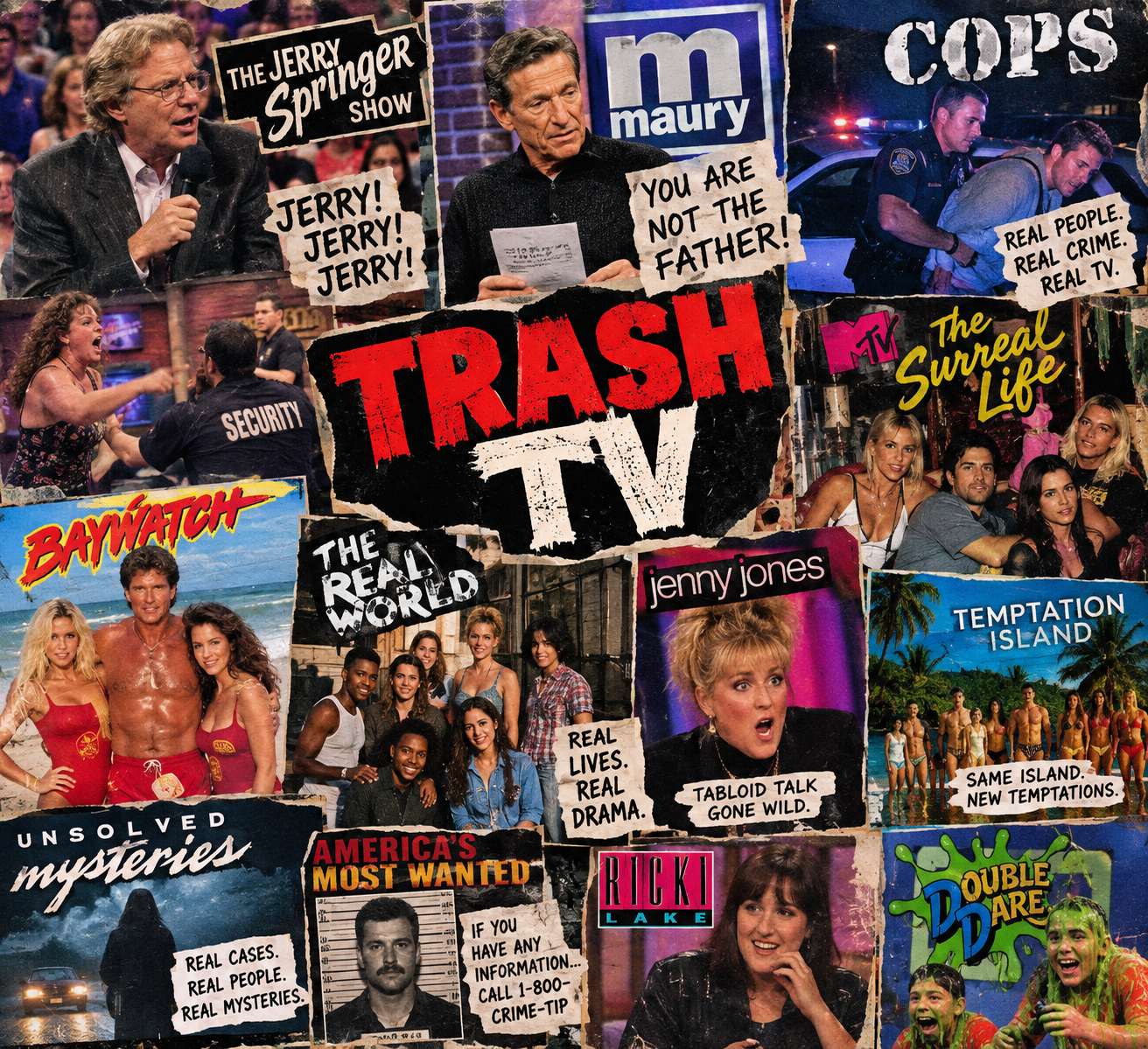
Before TikTok gave everyone a platform and Twitter gave everyone a nervous breakdown, there was daytime television.
And standing in the middle of it all was Jerry Springer.
The Jerry Springer Show didn't just lower the bar for daytime television. It dug a hole underneath the bar, dropped it in, and started selling tickets.
The premise was beautifully simple: find people with spectacularly complicated personal lives, put them under studio lights, invite their relatives, exes and questionable romantic decisions onto a stage, and wait for somebody to throw a chair.
Sometimes there was a paternity test. Sometimes there was a cheating spouse. Sometimes there was a family secret so bizarre that daytime television suddenly felt like an episode of The Twilight Zone — if The Twilight Zone had a screaming audience and security guards.
And then came the chant:
"JERRY! JERRY! JERRY!"
It was less a television program than a televised bar fight with commercial breaks.
Springer became the patron saint of America's guilty pleasure. The show offered something that respectable television couldn't: glorious, unapologetic human chaos. No fancy cinematography. No prestige drama. Just people airing their dirty laundry while an audience screamed for more.
Critics accused the show of exploiting people, and that criticism became part of the larger debate surrounding trash television. Were viewers watching real people in genuine crisis — or participants who understood that humiliation could be turned into entertainment?
The uncomfortable answer was probably both.
But let's give Springer credit for one thing: he understood television.
He knew that audiences don't necessarily need a hero. Sometimes they just need a train wreck.
The strange thing is that Jerry Springer now looks almost quaint. Today, people broadcast breakups, family feuds, meltdowns and bizarre personal confessions directly from their bedrooms. There are no studio producers required. No waiting for the next episode. No commercial break.
The freak show went digital.
Jerry Springer didn't create our appetite for other people's chaos. He simply gave it a stage, a microphone and a studio audience.
For all its ridiculousness, The Jerry Springer Show was a cultural landmark because it understood something television executives have always known: people will watch almost anything if you promise them something outrageous is about to happen.
And if somebody gets punched in the process?
Well, that's just good television.
Jerry wasn't the end of civilization.
He was the warm-up act.