
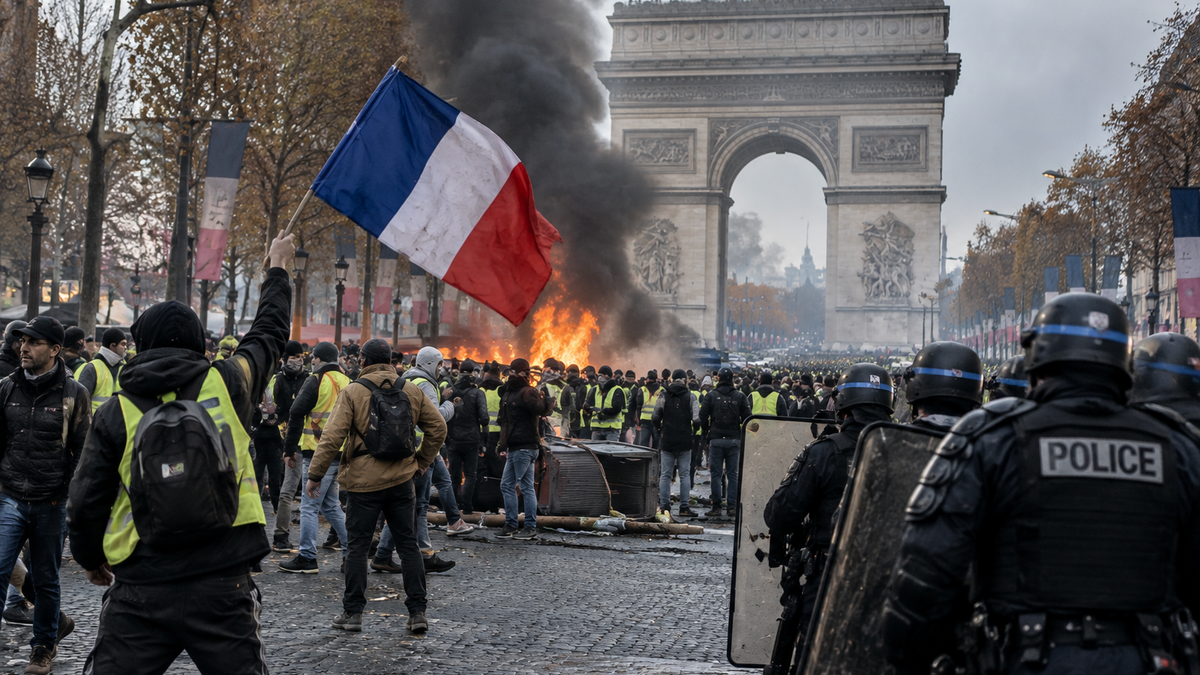
France's tourism brochure promises romance, fine dining and charming streets. The October 17 edition came with tear gas.
Hundreds of thousands marched against rising living costs and deteriorating public services. Authorities counted roughly 550,000 demonstrators; organizers put the figure at 800,000. Most protested peacefully, while violent groups attacked buildings, looted shops and clashed with police. By Saturday evening, Prime Minister Sébastien Lecornu reported around 1,200 arrests.
That distinction matters. A crowd demanding a livable future and a guy stealing sneakers may occupy the same camera frame. They aren't necessarily working toward the same objective.
But guess which one makes better television?
A burning car gives the evening news everything it needs: action, danger and absolutely no obligation to explain why anybody showed up.
Who Was Actually in the Street
The demonstrations brought together student grievances and broader economic anger. Students have been protesting since September; unions backed demands for better wages, pensions and public services. Meanwhile, police tactics face scrutiny, including an investigation after a demonstrator lost a hand in Saint-Étienne. Authorities had not confirmed reports that a police grenade caused that injury.
Kids asking for functioning schools shouldn't require a correspondent in protective equipment.
The Hostage Negotiation Nobody Asked For
There's something grotesque about a political culture where ordinary expectations — an available teacher, an affordable grocery bill, enough money left after work to participate in being alive — get treated like the opening demands of a hostage negotiation.
Politicians love discussing the future. The future makes an excellent speech topic because it can't stand up halfway through and ask why its classroom is falling apart.
Then the future turns eighteen, walks into the street and becomes a security problem.
On Burning Things Down
And before anyone mistakes this for a love letter to smashing windows: burning your neighborhood is a lousy way to improve its services. The shopkeeper sweeping glass didn't design the economy. Destroying public buildings also hands officials an escape route — spend the next week discussing the damage instead of the demands.
Congratulations. You've supplied the distraction and volunteered your neighbors to pay for it.
Governments still have responsibilities beyond identifying the worst person in a crowd. Investigate attacks. Investigate police misconduct. Then answer the people who came with grievances instead of projectiles.
The Uncomfortable Question
The uncomfortable question is how many people can follow the rules, work, study and wait before deciding that patience has become another expense they can't afford.
France doesn't need another stern lecture delivered from behind an expensive desk.
It needs leaders who can explain why a functioning society keeps getting presented as an unreasonable request.